Allergic Eye Diseases
Allergic eye diseases are common ocular surface conditions that may cause itching, redness, watering and discomfort in the eyes.
Although they are more common in spring, they may occur at any time of year.
Although many people mistake these symptoms for an infection, itching and watering of the eyes may often be caused by allergic reactions.
What Is an Eye Allergy?
An eye allergy occurs when the ocular surface overreacts to pollen, house dust, animal dander or similar environmental triggers.
This condition is medically known as allergic conjunctivitis and may vary in severity.
Symptoms
- Itchy eyes
- Redness
- Watery eyes
- Burning sensation
- Swollen eyelids
- Sensitivity to light
Intense itching, in particular, is one of the most typical symptoms of an eye allergy.
The Connection with the Ocular Surface
Allergic eye disease is often not limited to the allergy itself.
Dry eye, eyelid margin disorders and environmental factors may also make symptoms feel more pronounced.
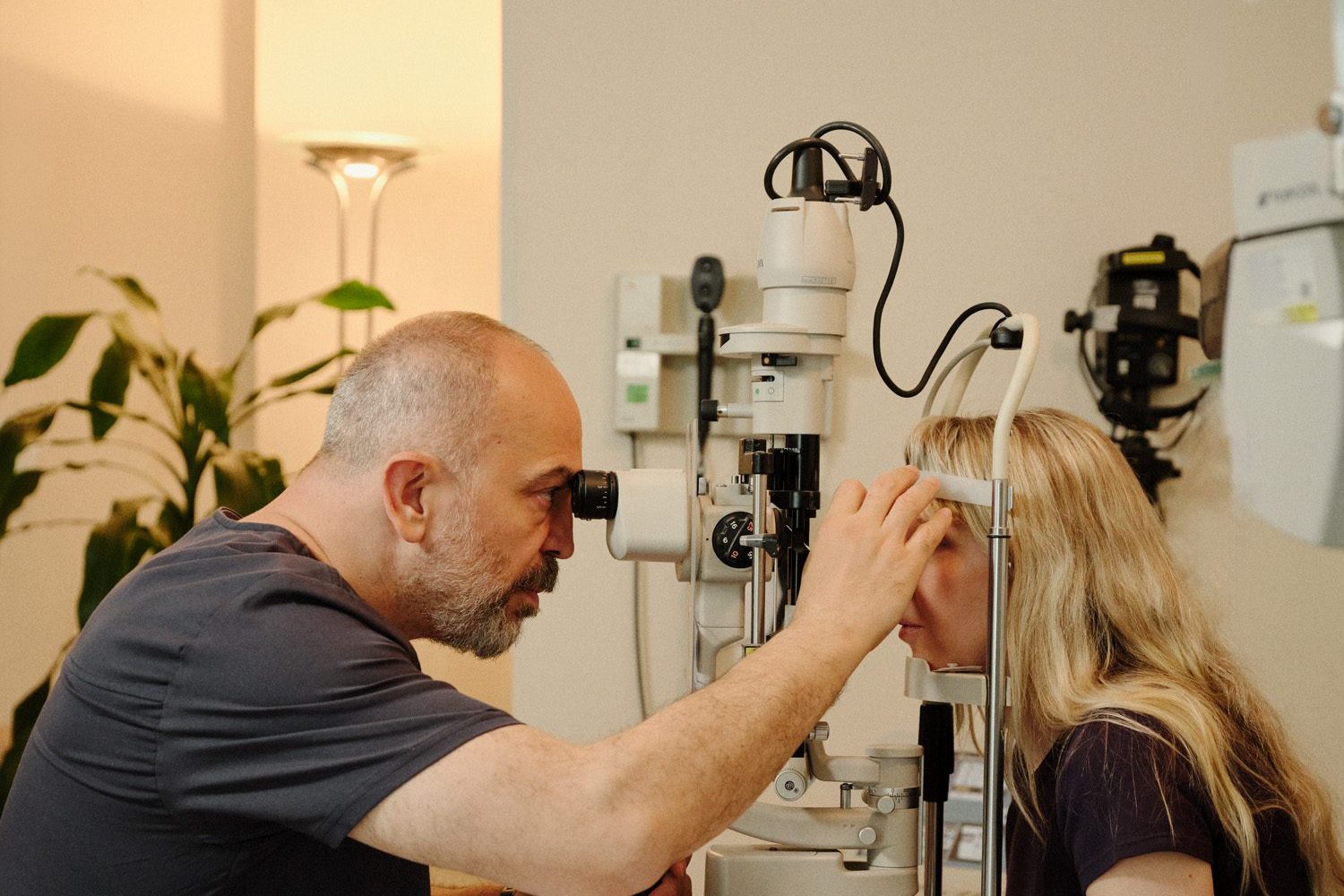
For this reason, it is important to assess the ocular surface as a whole.
Treatment
Treatment is planned according to the severity of symptoms, the type of allergy and the condition of the ocular surface.
Avoiding allergens, appropriate eye drops and treatments that support the ocular surface may help control symptoms in many patients.
Long-Term Follow-Up
In some people, symptoms occur only at certain times of year, while in others they may continue throughout the year.
The aim is not only to reduce itching, but also to protect ocular surface health and control the recurrence of symptoms.