Cataract Surgery
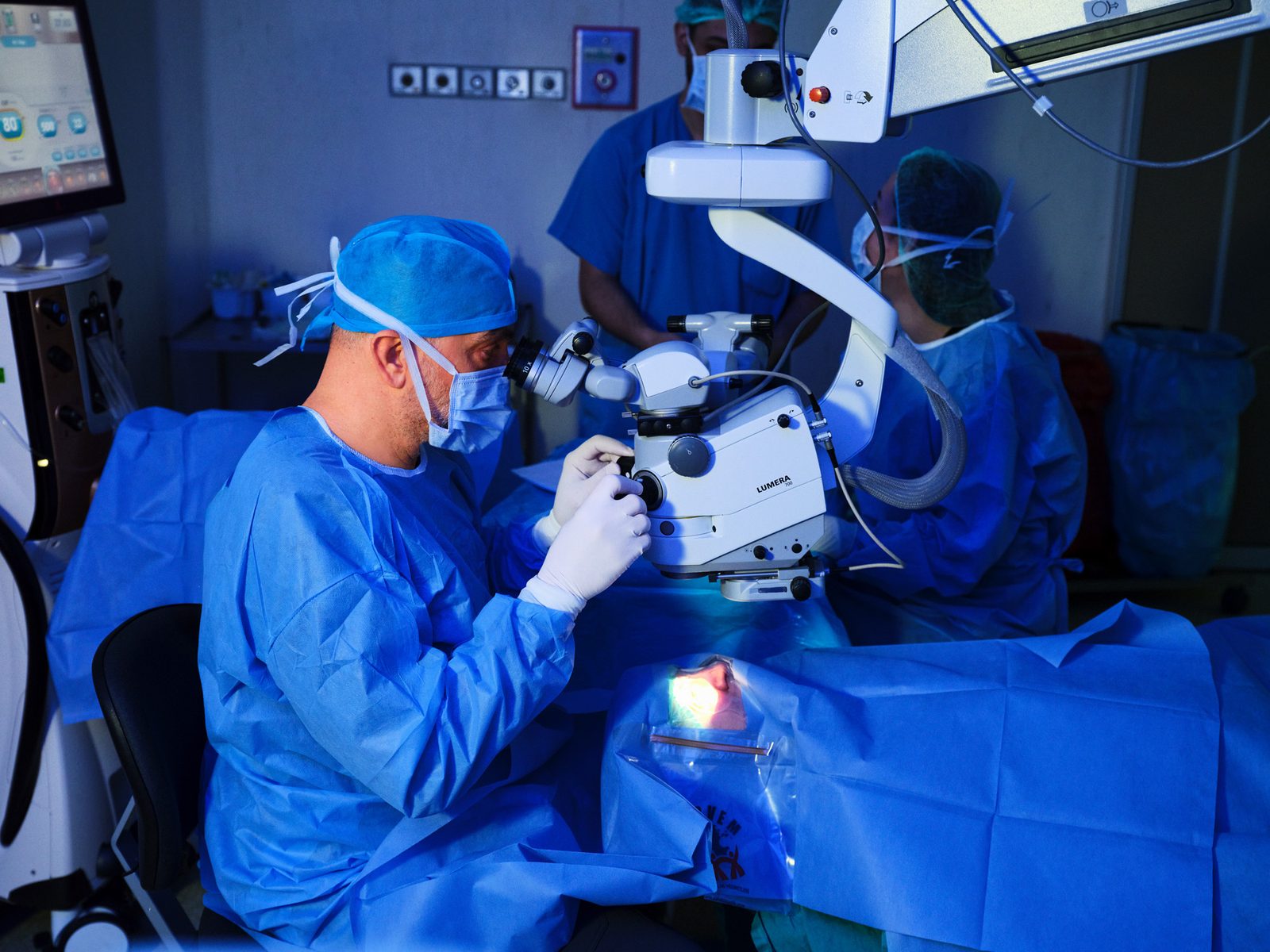
A cataract is the gradual loss of transparency and clouding of the eye’s natural lens.
Although it usually develops with age, it may also occur at a younger age, following certain eye diseases or as a result of trauma.
Surgery is currently the only scientifically accepted treatment for cataract.
What Are the Symptoms of Cataract?
- Blurred or hazy vision
- Reduced night vision
- Sensitivity to light
- Glare from vehicle headlights
- Colours appearing faded
- Frequent need to change glasses prescriptions
When Should Cataract Surgery Be Performed?
In the past, patients were advised to wait until the cataract was fully mature.
Today, the decision is usually based not only on visual acuity, but on how much the cataract affects daily life.
When reading, driving, using screens or carrying out daily activities becomes difficult, it may be time to consider surgery.
Can Cataract Surgery Be Postponed?
In some patients, a cataract may be monitored for a long period.
However, waiting longer than necessary is not always advantageous. As a cataract progresses, the lens may harden and surgery may become technically more difficult in some cases.
The timing of surgery should therefore be assessed individually.
Modern Cataract Surgery
Today, cataract surgery involves more than simply removing the cloudy lens.
The intraocular lens implanted during surgery may also allow the patient's visual needs to be taken into account when planning the procedure.
For this reason, modern cataract surgery is considered not only a treatment for cataract, but also a process of visual rehabilitation.
Lens Selection
Different intraocular lens options are available for cataract surgery.
Monofocal, toric, EDOF and multifocal lenses are designed for different needs.
Not every lens is suitable for every patient. Eye anatomy, daily habits and visual expectations are considered together when selecting a lens.
Is Cataract Surgery Safe?
Cataract surgery is considered one of the most commonly performed surgical procedures, with a high rate of success.
However, as with any surgical procedure, comprehensive assessment and appropriate planning are important.
Recovery After Surgery
Many patients can return to their daily activities within a short period.
Although visual recovery varies from person to person, complete healing of the eye and stabilisation of vision may take some time.
Individualised Cataract Surgery Planning
A successful cataract procedure involves more than technical surgical success alone.
Planning that considers eye anatomy, lifestyle, night-vision expectations, reading habits and daily needs together plays an important role in postoperative satisfaction.
The aim is not only to remove the cataract, but to achieve the most appropriate vision for the individual.